According to SPER Market Research, the Global Non-Hormonal Contraceptives Market is estimated to reach USD 40.03 billion by 2034 with a CAGR 7.24%.
Introduction and Overview
The report includes an in-depth analysis of the Global Non-Hormonal Contraceptives Market, including market size and trends, product mix, Applications, and supplier analysis.
The global Non-Hormonal Contraceptives Market was valued at USD 19.9 billion in 2024 and is expected to grow at a CAGR of around 7.24% from 2025 to 2034. The market is experiencing strong growth as more consumers and healthcare providers seek contraceptive solutions that do not involve synthetic hormones, reducing concerns over side effects linked to hormonal methods such as mood changes or weight fluctuations. Products like condoms, copper IUDs, and other barrier devices offer effective pregnancy prevention while also providing protection against sexually transmitted diseases. Rising public awareness of safe sexual practices, growing preference for hormone-free birth control, and supportive government and NGO initiatives promoting family planning are further accelerating adoption globally. Additionally, increasing accessibility through retail and online distribution channels is enhancing market reach and consumer convenience.
By Type:
The devices segment dominates the non-hormonal contraceptives market, with products such as condoms, intrauterine devices (IUDs), vaginal rings, and subdermal implants accounting for the largest share and projected to grow at a strong pace over the forecast period. Within this category, copper IUDs are widely preferred due to their long-acting, hormone-free protection, while condoms remain essential because of their accessibility and dual prevention of pregnancies and sexually transmitted diseases. The broad availability and ease of use of these devices support their position as the leading segment in the market.
By Gender:
The female segment dominates the non-hormonal contraceptives market, as women represent the primary users of long-acting reversible contraceptives such as copper IUDs, subdermal implants, and spermicidal products. Female contraceptive preferences are strongly influenced by factors like effectiveness, ease of use, and long-term protection, particularly for women nearing menopause who seek hassle-free solutions. This substantial demand from women drives the largest revenue share in the market.
By Age Group:
The above 44 years age group dominates the non-hormonal contraceptives market, accounting for a majority share of revenue. Women in this age bracket often prefer long-term, hormone-free contraception due to health considerations and the desire to avoid unintended pregnancies as they approach menopause. The use of methods such as copper IUDs, vaginal creams, and permanent sterilization procedures contributes significantly to the segment’s lead.
Regional Insights:
The non-hormonal contraceptives market is evaluated across major regions including North America, Europe, Asia Pacific, Latin America, and the Middle East & Africa. North America, led by the U.S. and Canada, dominates the market due to high awareness of reproductive health, widespread adoption of condoms and copper IUDs, and strong presence of key manufacturers. Europe follows closely, with countries such as Germany, the UK, France, Spain, Italy, and the Netherlands benefiting from supportive government family planning programs and well-established healthcare systems. Asia Pacific is witnessing rapid growth across China, Japan, India, Australia, and South Korea, driven by large populations, high unmet contraceptive needs, and increasing awareness initiatives. Latin America and the Middle East & Africa are emerging markets, supported by improving access to contraception and expanding public health campaigns.
Market Competitive Landscape:
The Non-Hormonal Contraceptives Market is highly consolidated. Some of the market key players are AbbVie, Bayer, Church & Dwight Co., CooperCompanies, CUPID, FUJI LATEX, HLL Lifecare, Mankind, MAYER, Viatris, Okamoto, Pregna International, Reckitt, SMB, Veru
Recent Developments:
• In September 2024, Durex, a brand of Reckitt, launched its' Close- Fit Thin Condoms' in India. It's a member's first in the country and the brand is promoting it as unnoticeable condoms. similar innovative product launch may enable the company to further consolidate its leading assiduity position in the country.
• In April 2023, Veru Inc. blazoned a strategic cooperation with Afaxys Group Services, LLC for the commercialization and distribution of Veru’s FC2 Female Condom through AGS Group Purchasing Organization (GPO). This strategic move helped the company to expand into new geographical locales and ameliorate its deals prospect.
• In December 2022, CooperSurgical, Inc. blazoned a strategic cooperation with Ostro to launch a new consumer engagement result for its hormone-free IUD, Paragard.
Scope of the report:
Report Metric Details
Market size available for the years 2021-2034
Base year considered 2024
Forecast Period 2025-2034
Segments Covered By Type, By Gender, By Age Group
Regions Covered North America, Latin America, Asia-Pacific,
Europe, and Middle East & Africa
Companies Covered AbbVie, Bayer, Church & Dwight Co., CooperCompanies, CUPID, FUJI LATEX, HLL Lifecare, Mankind, MAYER, Viatris, Okamoto, Pregna International, Reckitt, SMB, Veru
Key Topics Covered in the Report
• Global Non-Hormonal Contraceptives Market Size (FY’2021-FY’2034)
• Overview of Global Non-Hormonal Contraceptives Market
• Segmentation of Global Non-Hormonal Contraceptives Market by Component (Devices, Sterilization, Other product types)
• Segmentation of Global Non-Hormonal Contraceptives Market by Technology (Male, Female)
• Segmentation of Global Non-Hormonal Contraceptives Market by Organization Size (15-44 years, Above 44 years)
• Statistical Snap of Global Non-Hormonal Contraceptives Market
• Expansion Analysis of Global Non-Hormonal Contraceptives Market
• Problems and Obstacles in Global Non-Hormonal Contraceptives Market
• Competitive Landscape in the Global Non-Hormonal Contraceptives Market
• Details on Current Investment in Global Non-Hormonal Contraceptives Market
• Competitive Analysis of Global Non-Hormonal Contraceptives Market
• Prominent Players in the Global Non-Hormonal Contraceptives Market
• SWOT Analysis of Global Non-Hormonal Contraceptives Market
• Global Non-Hormonal Contraceptives Market Future Outlook and Projections (FY’2025-FY’2034)
• Recommendations from Analyst
Global Non-Hormonal Contraceptives Market Size- By Type, By Gender, By Age Group -Regional Outlook, Competitive Strategies and Segment Forecast to 2034
1. Introduction
1.1. Scope of the report
1.2. Market segment analysis
2. Research Methodology
2.1. Research data source
2.1.1. Secondary Data
2.1.2. Primary Data
2.1.3. SPER’s internal database
2.1.4. Premium insight from KOL’s
2.2. Market size estimation
2.2.1. Top-down and Bottom-up approach
2.3. Data triangulation
3. Executive Summary
4. Market Dynamics
4.1. Driver, Restraint, Opportunity and Challenges analysis
4.1.1. Drivers
4.1.2. Restraints
4.1.3. Opportunities
4.1.4. Challenges
5. Market variable and outlook
5.1. SWOT Analysis
5.1.1. Strengths
5.1.2. Weaknesses
5.1.3. Opportunities
5.1.4. Threats
5.2. PESTEL Analysis
5.2.1. Political Landscape
5.2.2. Economic Landscape
5.2.3. Social Landscape
5.2.4. Technological Landscape
5.2.5. Environmental Landscape
5.2.6. Legal Landscape
5.3. PORTER’s Five Forces
5.3.1. Bargaining power of suppliers
5.3.2. Bargaining power of buyers
5.3.3. Threat of Substitute
5.3.4. Threat of new entrant
5.3.5. Competitive rivalry
5.4. Heat Map Analysis
6. Competitive Landscape
6.1. Global Non-Hormonal Contraceptives Market Manufacturing Base Distribution, Sales Area, Product Type
6.2. Mergers & Acquisitions, Partnerships, Product Launch, and Collaboration in Global Non-Hormonal Contraceptives Market
7. Global Non-Hormonal Contraceptives Market, By Type, (USD Million) 2021-2034
7.1. Devices
7.1.1. Condoms
7.1.2. Intra-uterine devices
7.1.3. Vaginal rings
7.1.4. Subdermal implants
7.1.5. Other devices
7.2. Sterilization
7.2.1. Vasectomy
7.2.2. Tubal ligation
7.3. Other product types
8. Global Non-Hormonal Contraceptives Market, By Gender, (USD Million) 2021-2034
8.1. Male
8.2. Female
9. Global Non-Hormonal Contraceptives Market, By Age Group, (USD Million) 2021-2034
9.1. 15-44 years
9.2. Above 44 years
10. Global Non-Hormonal Contraceptives Market, (USD Million) 2021-2034
10.1. Global Non-Hormonal Contraceptives Market Size and Market Share
11. Global Non-Hormonal Contraceptives Market, By Region, 2021-2034 (USD Million)
11.1. Asia-Pacific
11.1.1. Australia
11.1.2. China
11.1.3. India
11.1.4. Japan
11.1.5. South Korea
11.1.6. Rest of Asia-Pacific
11.2. Europe
11.2.1. France
11.2.2. Germany
11.2.3. Italy
11.2.4. Spain
11.2.5. United Kingdom
11.2.6. Rest of Europe
11.3. Middle East and Africa
11.3.1. Kingdom of Saudi Arabia
11.3.2. United Arab Emirates
11.3.3. Qatar
11.3.4. South Africa
11.3.5. Egypt
11.3.6. Morocco
11.3.7. Nigeria
11.3.8. Rest of Middle-East and Africa
11.4. North America
11.4.1. Canada
11.4.2. Mexico
11.4.3. United States
11.5. Latin America
11.5.1. Argentina
11.5.2. Brazil
11.5.3. Rest of Latin America
12. Company Profile
12.1. abbVie
12.1.1. Company details
12.1.2. Financial outlook
12.1.3. Product summary
12.1.4. Recent developments
12.2. Bayer
12.2.1. Company details
12.2.2. Financial outlook
12.2.3. Product summary
12.2.4. Recent developments
12.3. Church & Dwight Co.
12.3.1. Company details
12.3.2. Financial outlook
12.3.3. Product summary
12.3.4. Recent developments
12.4. CooperCompanies
12.4.1. Company details
12.4.2. Financial outlook
12.4.3. Product summary
12.4.4. Recent developments
12.5. CUPID
12.5.1. Company details
12.5.2. Financial outlook
12.5.3. Product summary
12.5.4. Recent developments
12.6. FUJI LATEX
12.6.1. Company details
12.6.2. Financial outlook
12.6.3. Product summary
12.6.4. Recent developments
12.7. HLL Lifecare
12.7.1. Company details
12.7.2. Financial outlook
12.7.3. Product summary
12.7.4. Recent developments
12.8. Mankind
12.8.1. Company details
12.8.2. Financial outlook
12.8.3. Product summary
12.8.4. Recent developments
12.9. MAYER
12.9.1. Company details
12.9.2. Financial outlook
12.9.3. Product summary
12.9.4. Recent developments
12.10. VIATRIS
12.10.1. Company details
12.10.2. Financial outlook
12.10.3. Product summary
12.10.4. Recent developments
12.11. Okamoto
12.11.1. Company details
12.11.2. Financial outlook
12.11.3. Product summary
12.11.4. Recent developments
12.12. PREGNA INTERNATIONAL
12.12.1. Company details
12.12.2. Financial outlook
12.12.3. Product summary
12.12.4. Recent developments
12.13. Reckitt
12.13.1. Company details
12.13.2. Financial outlook
12.13.3. Product summary
12.13.4. Recent developments
12.14. SMB
12.14.1. Company details
12.14.2. Financial outlook
12.14.3. Product summary
12.14.4. Recent developments
12.15. Veru
12.15.1. Company details
12.15.2. Financial outlook
12.15.3. Product summary
12.15.4. Recent developments
13. Conclusion
14. List of Abbreviations
15. Reference Links
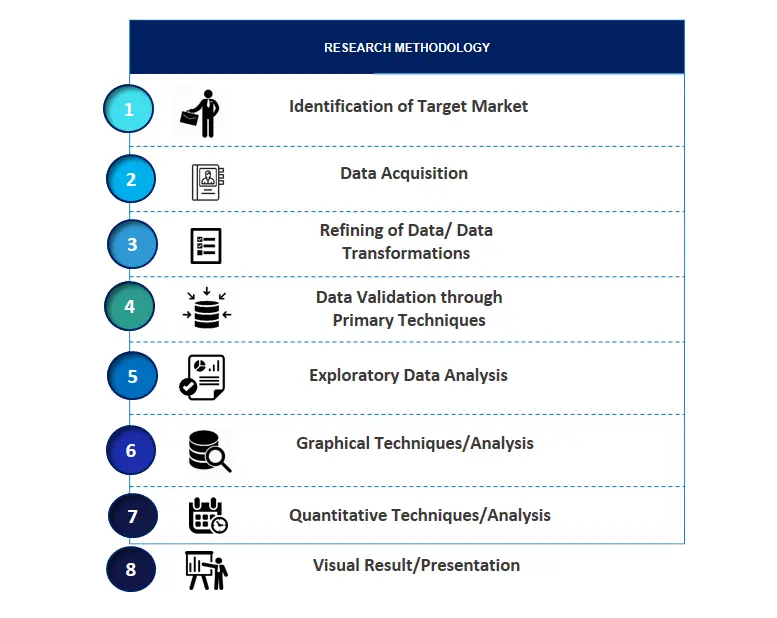
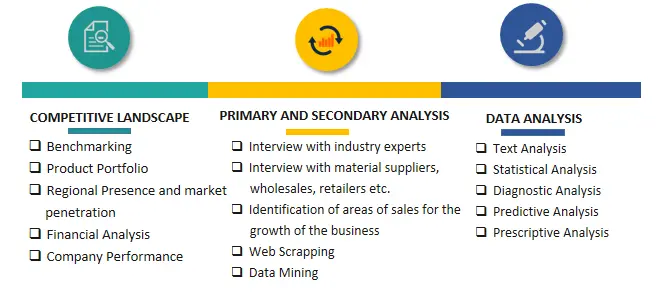
SPER Market Research’s methodology uses great emphasis on primary research to ensure that the market intelligence insights are up to date, reliable and accurate. Primary interviews are done with players involved in each phase of a supply chain to analyze the market forecasting. The secondary research method is used to help you fully understand how the future markets and the spending patterns look likes.
The report is based on in-depth qualitative and quantitative analysis of the Product Market. The quantitative analysis involves the application of various projection and sampling techniques. The qualitative analysis involves primary interviews, surveys, and vendor briefings. The data gathered as a result of these processes are validated through experts opinion. Our research methodology entails an ideal mixture of primary and secondary initiatives.